Bedtime by age
What time should a 3 year old go to bed?
Between 7:00 and 8:00 pm for most 3-year-olds who wake up around 6:30. Three-year-olds need 10 to 13 hours a day. Some still nap and some have stopped, and that decides where in the window lights out should land.
Their lights out
Lights out between 7:00 and 8:00 pm.
Tonight, counted back
An hour and a half out leaves room for a bath without rushing.
Or screens off, on a night without a bath.
What's different at three
- Sleep
- 10 to 13 hours a day, naps included
- Naps
- Some still nap, about an hour
- Routine
- 30 to 40 minutes
- Still napping? Aim for the later end of the window. Stopped? The earlier end, and for the first few weeks without a nap, earlier than that.
- Quiet time helps even without the nap: an hour in their room with books keeps the late afternoon from falling apart.
- Stalling peaks around three: one more drink, one more hug, the lamp, the door. Build the "one more" into the routine so there's nothing left to ask for.
- If they've just moved to a bed, getting out is the new trick, and the fix is walking them back without a word. How to get a toddler to stay in bed.
By wake-up time
The same sleep, counted back from four common wake-ups. Lean early on a day they woke up tired or the nap went wrong.
| Up at | Lights out |
|---|---|
| 6:00 | 6:30–7:30 pm |
| 6:30 | 7:00–8:00 pm |
| 7:00 | 7:30–8:30 pm |
| 7:30 | 8:00–9:00 pm |
Sleep hours are the American Academy of Sleep Medicine's recommended ranges, which the American Academy of Pediatrics endorses. Every kid is a little different. If you're worried about how your child sleeps, ask their pediatrician. For any age and wake-up time, use the bedtime calculator.
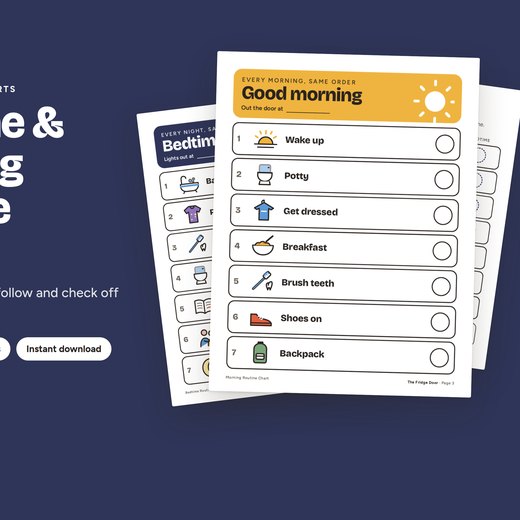
Knowing lights out is the easy part. Nightlight plans the two hours before it: a dinner that fits the energy you have left, then every step, timed back from 7:30.
Plan tonightFree, no account, and what you tap stays on your phone.